Case Study — PayPal Integration
Designing a dual-path checkout for Macy's and Bloomingdale's.
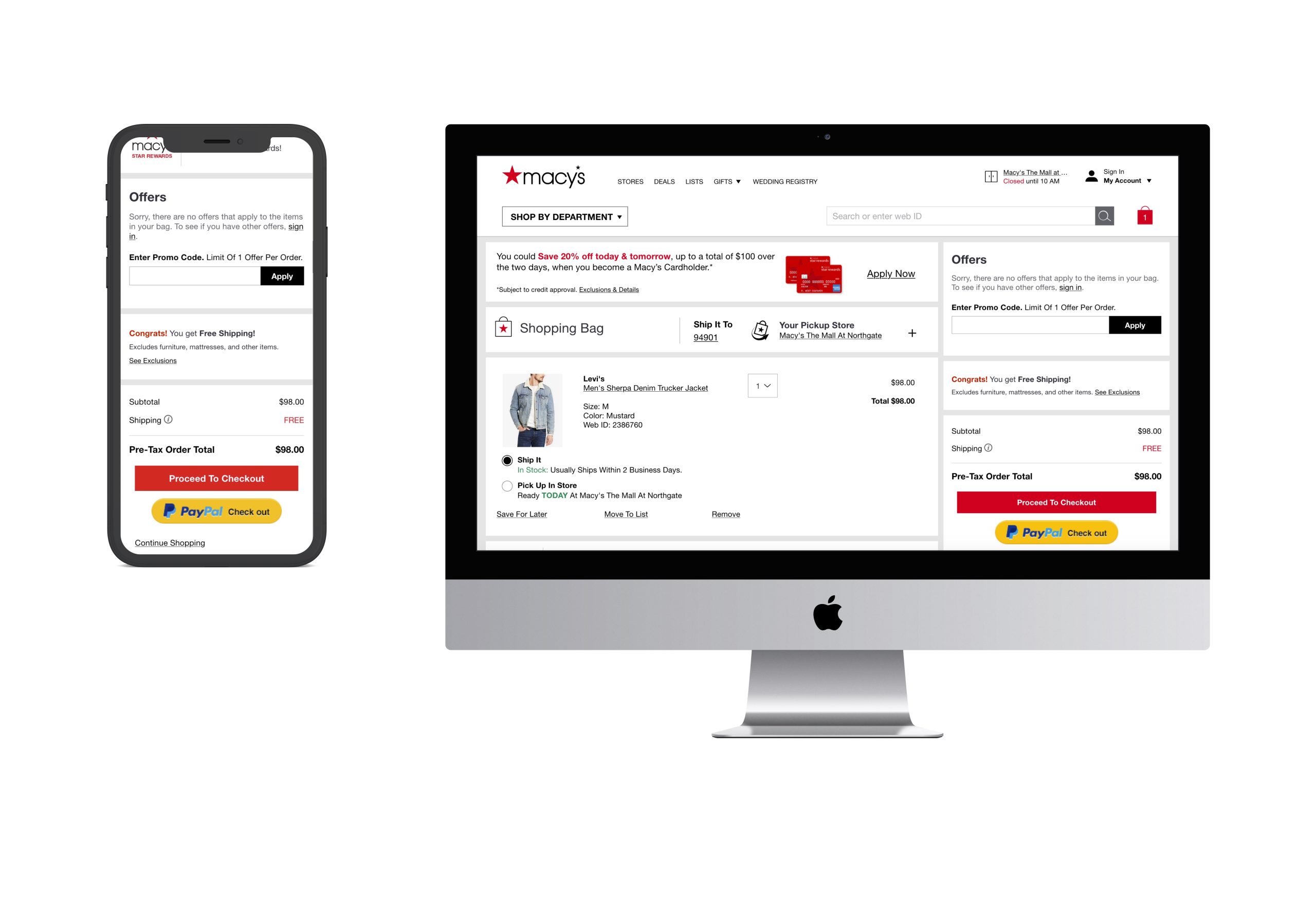
The Brief
Macy's and Bloomingdale's needed a more flexible checkout model as mobile commerce behavior started changing faster than the existing flow could keep up. The work focused on bringing PayPal into checkout in a way that reduced friction, supported different purchase intents, and scaled across both brands.
The result was a dual-path payment strategy: PayPal Express Checkout for users who wanted to move quickly from bag to purchase, and PayPal as a tender type for customers who still wanted the full checkout flow with PayPal available alongside other payment methods.
"The goal was not just to add PayPal. It was to design a payment system that could flex to different behaviors without breaking the checkout experience."
Project framing
Background
At the onset of mobile-first commerce, Macy's and Bloomingdale's were modernizing core checkout moments to improve clarity, performance, and conversion. At the same time, the business was expanding into international markets including China and the UAE, which raised the bar for trusted, flexible payment options.
Problem Space
The existing checkout experience was not optimized for mobile-first interactions and lacked a cohesive strategy for third-party payment integration. Users had to move through a multi-step flow with limited express options, which introduced friction and created avoidable drop-off.
At the system level, there was no shared framework for supporting different PayPal intents across brands. Express checkout and embedded checkout solved different problems, but the experience needed to feel consistent and scalable instead of bolted on.
Solution
Strategy
Core Move
Create two checkout pathways that support distinct user intent: one accelerated path for speed, and one embedded path for flexibility inside the standard checkout flow.
Express Checkout
Enable users to bypass the standard checkout flow and complete purchases directly from the bag page when speed is the priority.
Tender Type
Integrate PayPal inside the existing payment step so customers can use it alongside other payment methods without leaving the established flow.
Mobile-first
Reduce friction in small-screen contexts where long checkout sequences create disproportionate abandonment.
Brand-agnostic
Build the logic so it can support both Macy's and Bloomingdale's while remaining extensible for international rollout.
We also A/B tested the PayPal entry treatment itself, comparing the more familiar blue branding against a yellow-led variant to see which one produced the strongest response in context. That work helped us separate what users recognized as trustworthy from what simply stood out visually in checkout.
A/B test: PayPal branding treatment
Two branding directions were tested to understand whether standout color or native PayPal familiarity performed better in checkout.
The Two
Paths
Express Checkout
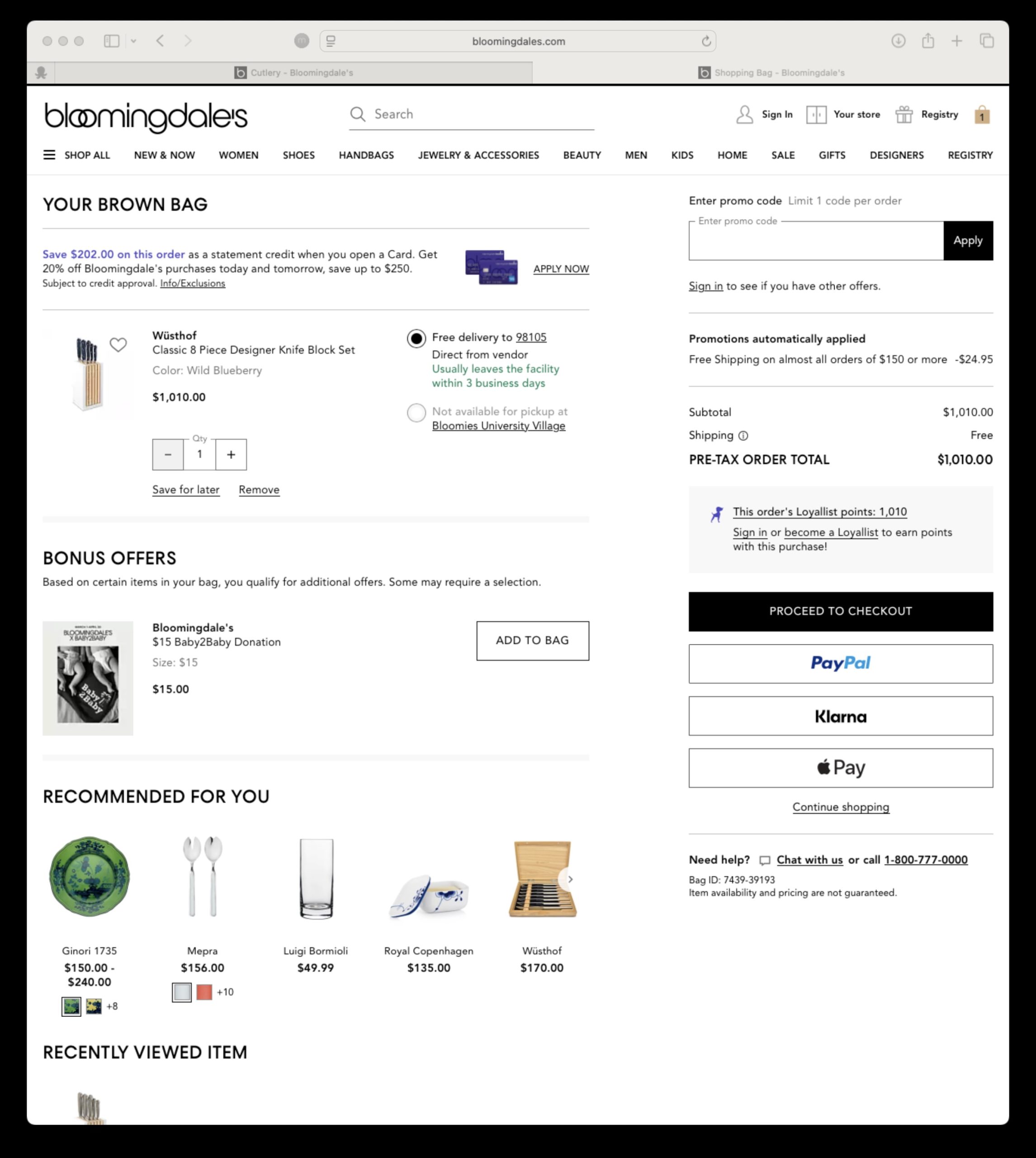
Customers could move from bag to purchase with less friction and fewer steps.
Express Checkout
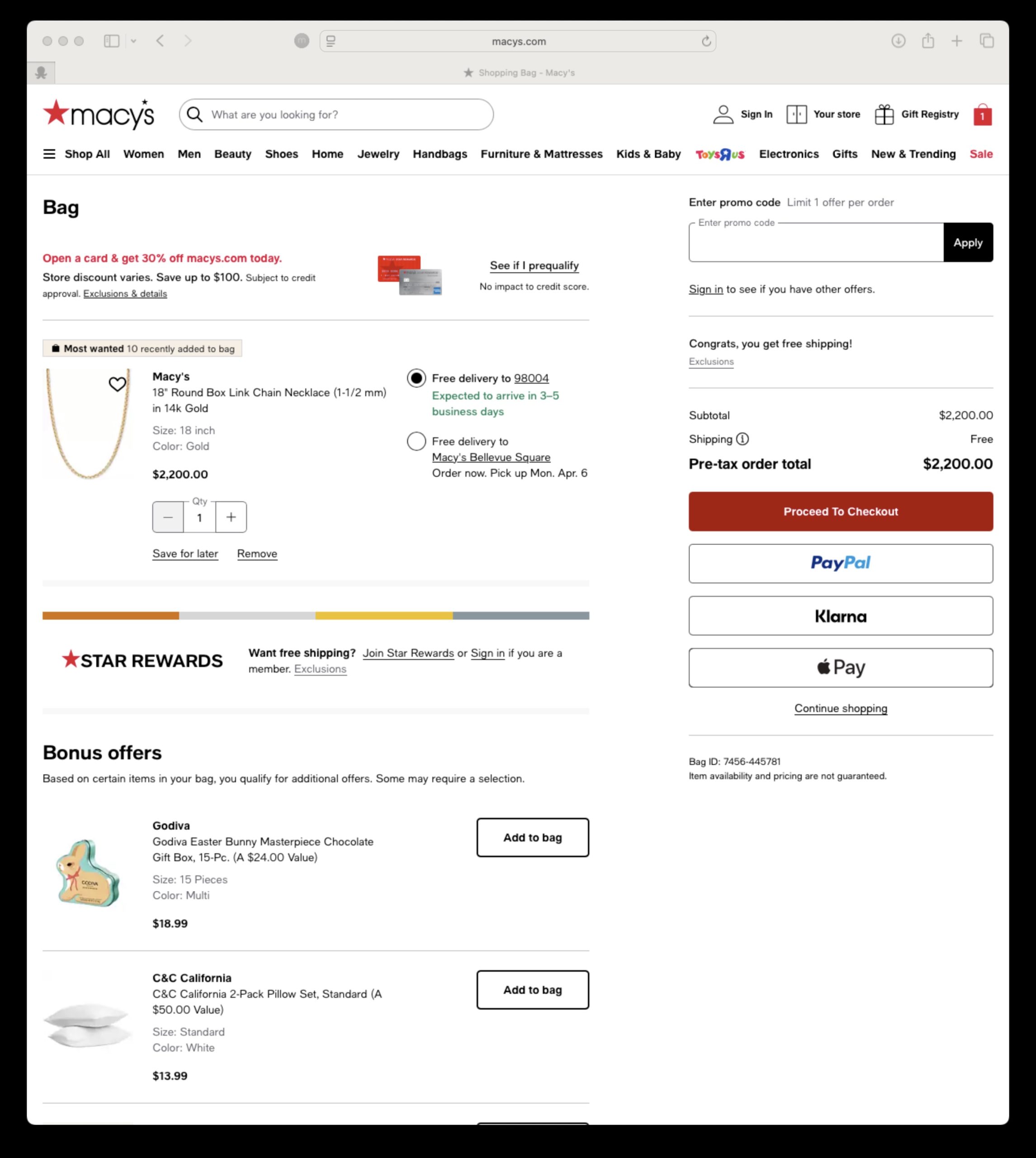
The pattern translated across both brands while preserving their distinct retail context.
Tender Type
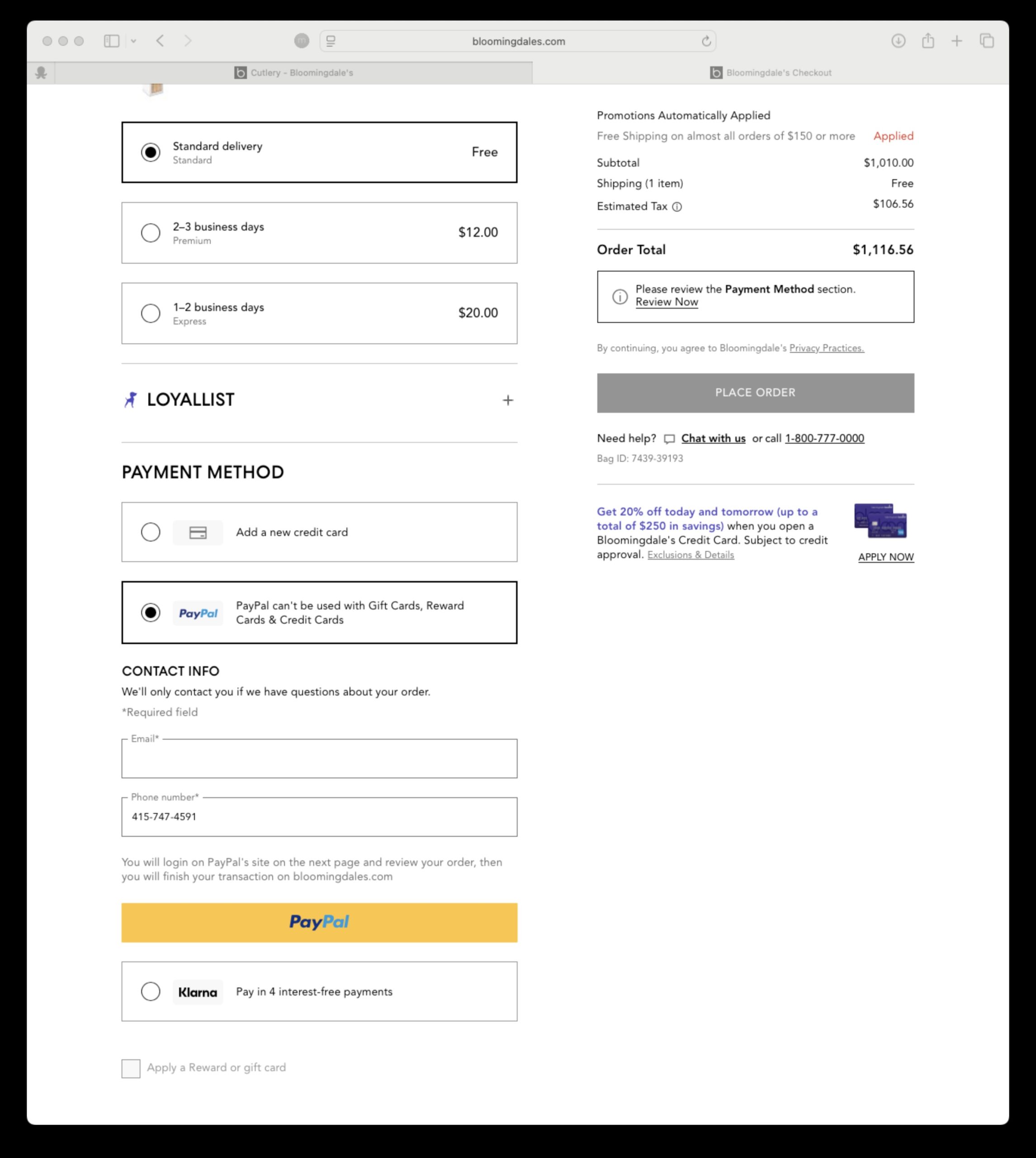
PayPal lived inside the standard flow for users who still wanted full cart review.
Tender Type
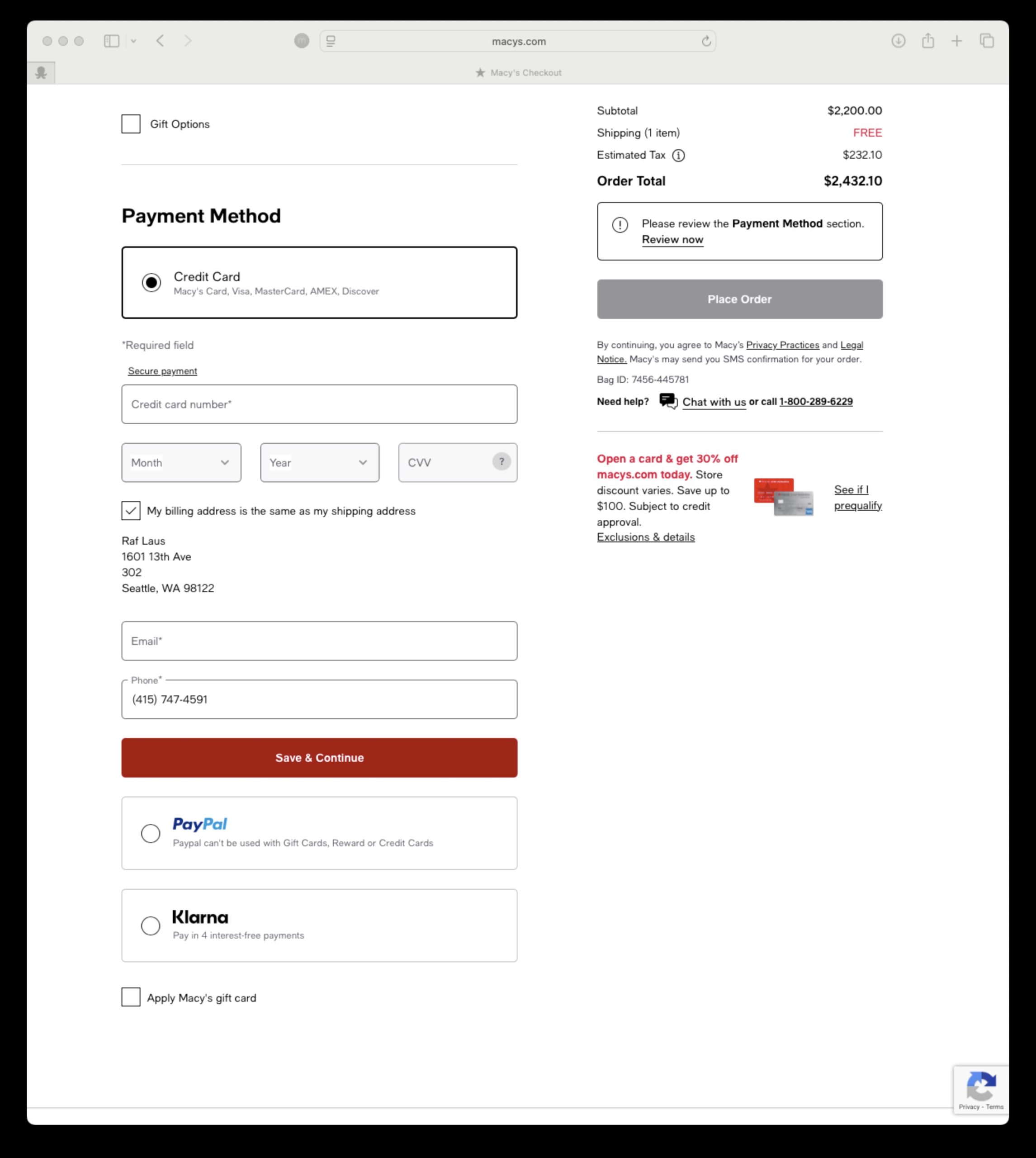
This path supported broader payment behavior without forcing an accelerated experience on everyone.
Outcomes &
Impact
Reduced friction in mobile checkout by giving customers both accelerated and embedded payment pathways, instead of forcing one behavior onto every transaction.
Outcome summary
Live
Artifacts
Reference screen
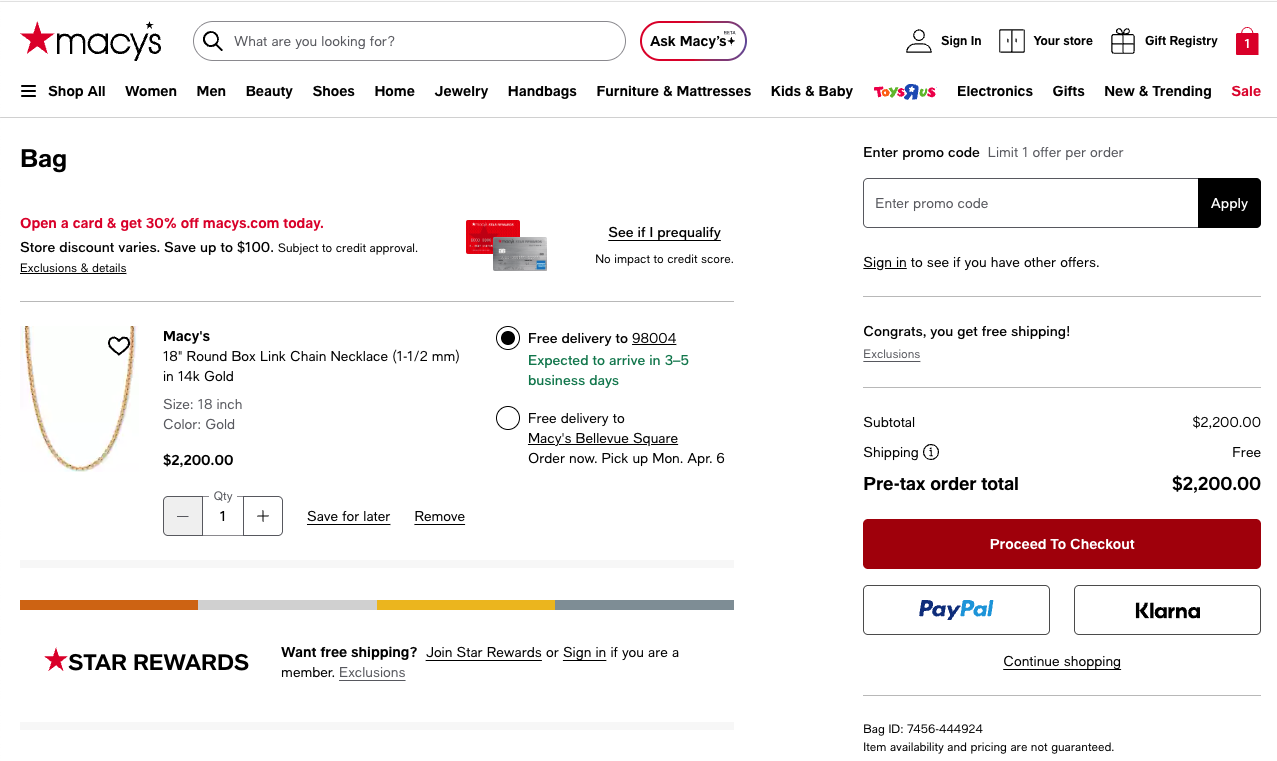
A current reference artifact from the live implementation set.
The integration remains visible in public payment/help documentation. I kept the links general and external rather than reproducing proprietary internal assets.
Reflection
This project sits at the intersection of conversion design and systems design. On the surface it is a payments feature, but the harder design problem was defining how one payment partner could support multiple user intents, multiple brands, and future international contexts without splintering checkout logic.
What mattered
Designing for behavior instead of only for feature parity. Express and embedded checkout were both necessary because they solved different customer needs.
What scaled
The real win was building a payment approach that could work across Macy's and Bloomingdale's rather than as a one-off implementation for a single brand.